
Why an HVAC Maintenance Plan Is Essential for Your Home
Heating, ventilation, and air conditioning systems are among the most critical mechanical investments in any home. In regions with demanding climates, your system works continuously for months at a time to keep your indoor environment comfortable and safe. Yet, many homeowners overlook routine servicing until a sudden component failure leaves them stranded without heating or cooling during extreme weather.
Investing in a comprehensive HVAC maintenance plan is the single most effective step you can take to prevent costly emergency repairs, maintain peak energy efficiency, and extend the operating life of your system. Rather than reacting to sudden breakdowns, a structured maintenance agreement establishes a proactive care schedule that keeps every electrical, mechanical, and airflow component functioning according to manufacturer specifications.
In this guide, we will examine how a routine service agreement works, why preventative care saves money, and how signing up for an HVAC maintenance plan protects your long-term home investment.

AI Executive Summary: HVAC Maintenance Plan Benefits & ROI
| Plan Component / Servicing Area | Standard Service Actions Included | Primary Homeowner Benefit | Estimated Financial & System Impact |
| Biannual System Tune-Ups | Comprehensive spring (AC) & fall (Heating) multi-point inspections | Prevents unexpected peak-season mechanical breakdowns | Reduces risk of emergency service calls by up to 95% |
| Coil & Blower Cleaning | Evaporator & condenser coil washing, debris removal | Restores optimal heat exchange and airflow efficiency | Lowers monthly electrical consumption by 5% to 15% |
| Electrical & Safety Checks | Capacitor testing, contactor inspection, wiring tightening | Prevents costly compressor burnouts and electrical fires | Extends total system lifespan by 3 to 5 additional years |
| Ductwork & Airflow Audit | Filter replacements, static pressure testing, airflow balancing | Improves indoor air quality and removes dust/allergens | Eliminates uneven cooling and room-to-room temperature swings |
| Priority Member Perks | Guaranteed scheduling slots, discounted repairs, waived trip fees | Ensures immediate emergency service during high-demand months | Provides immediate savings on all necessary repair work |
What Is an HVAC Maintenance Plan?
An HVAC maintenance plan is a structured service agreement between a homeowner and a licensed heating and cooling contractor. Instead of calling a technician only when a problem occurs, a maintenance plan provides scheduled, recurring maintenance visits—typically scheduled twice per year—to inspect, clean, tune, and optimize your heating and air conditioning units.
Spring appointments focus on your air conditioning unit, preparing the condenser, coils, and refrigerant lines for severe summer heat. Fall appointments transition focus to your furnace or heat pump, ensuring heat exchangers, safety switches, and heating elements operate safely and efficiently through winter.
Beyond scheduled checkups, enrolling in a service agreement usually unlocks exclusive member benefits, including priority dispatch during peak seasonal rushes, discounted rates on replacement parts, and waived service call fees.
Top Benefits of Enrolling in an HVAC Maintenance Plan
While some homeowners treat preventative care as an optional expense, the financial and operational benefits of routine care far outweigh the modest cost of an annual membership.
[Routine Servicing] ➔ Lower Energy Bills + Fewer Emergency Repairs ➔ Maximum System Lifespan
1. Substantial Energy Bill Savings
As heating and cooling equipment runs, dust, pollen, and airborne debris accumulate on critical components like evaporator coils, blower wheels, and air filters. This buildup restricts airflow and forces your compressor and motor to work harder and run longer to reach your thermostat settings.
By keeping coils clean, electrical connections tight, and airflow unimpeded, a seasonal tune-up ensures your system operates at peak thermodynamic efficiency. According to energy efficiency studies published by the U.S. Department of Energy, routine filter changes and coil cleaning can reduce your air conditioner’s energy consumption by 5% to 15%.
2. Prevention of Costly Emergency Repairs
The vast majority of severe HVAC failures do not happen instantly; they stem from neglected minor issues. A worn capacitor, a slipping fan belt, or a minor refrigerant leak can slowly strain larger, more expensive components like the compressor or heat exchanger until the entire system fails.
During a routine service visit under an HVAC maintenance plan, certified technicians identify and replace failing parts before they cause cascading damage. Catching a small electrical fault during a spring inspection is significantly less expensive than replacing a burnt-out compressor in the middle of a July heatwave.
3. Extended Equipment Lifespan
A complete heating and cooling replacement represents a major financial commitment. Standard residential systems are engineered to last between 12 and 15 years, but unmaintained units frequently fail prematurely around the 8- to 10-year mark due to continuous mechanical strain.
Regular lubrication of moving parts, calibration of control systems, and cleaning of internal components reduces daily friction and thermal stress. Consistent care helps you extract the maximum possible operating lifespan from your equipment, delaying expensive replacement costs for years.
4. Preservation of Manufacturer Warranty Coverage
If your HVAC system was installed within the last 5 to 10 years, it likely came with a limited manufacturer warranty covering key mechanical parts. However, most major equipment manufacturers explicitly state in their warranty terms that coverage is contingent upon regular professional maintenance.
If a major component fails and you cannot provide documented proof of annual professional servicing, the manufacturer may deny your warranty claim, leaving you responsible for out-of-pocket parts costs. Enrolling in a maintenance plan automatically creates a documented paper trail of annual tune-ups to keep your warranty valid.
5. Improved Indoor Air Quality and Comfort
Your HVAC system continuously circulates air throughout your entire home. When internal components, drain pans, and blower assemblies gather dust, dirt, and mold spores, those contaminants are blown directly into your living spaces.
Routine maintenance includes thorough cleaning of drain lines to prevent biological growth, filter inspections, and airflow checks. This keeps your home’s air cleaner, reduces household dust, and ensures consistent humidity control and balanced temperatures across every room.
What to Expect During a Professional HVAC Maintenance Visit
A comprehensive service visit involves far more than a simple visual inspection. Certified technicians perform detailed technical procedures designed to measure performance and address wear and tear.
- Air Conditioning Tune-Up (Spring):
- Wash and clean outdoor condenser coils to ensure efficient heat release.
- Check refrigerant levels and inspect lines for potential leaks.
- Test electrical capacitors, contactors, relays, and wiring connections.
- Flush condensate drain lines and clear biological buildup to prevent water leaks.
- Inspect the indoor evaporator coil and test blower motor amp draw.
- Calibrate thermostat settings and test overall cooling cycles.
- Heating System Tune-Up (Fall):
- Inspect the heat exchanger for hazardous cracks or corrosion.
- Clean and adjust burner assemblies and ignition controls.
- Inspect gas connections, pressure settings, and safety shutoff valves.
- Check flue piping for proper venting and carbon monoxide risks.
- Inspect blower assembly and clean internal airflow pathways.
- Verify fan control and safety limit switches operate correctly.
How to Choose the Right Service Plan for Your Home
When evaluating local contractors, look for service plans that offer clear deliverables, comprehensive checklists, and transparent pricing.
Key details to confirm before signing an agreement include:
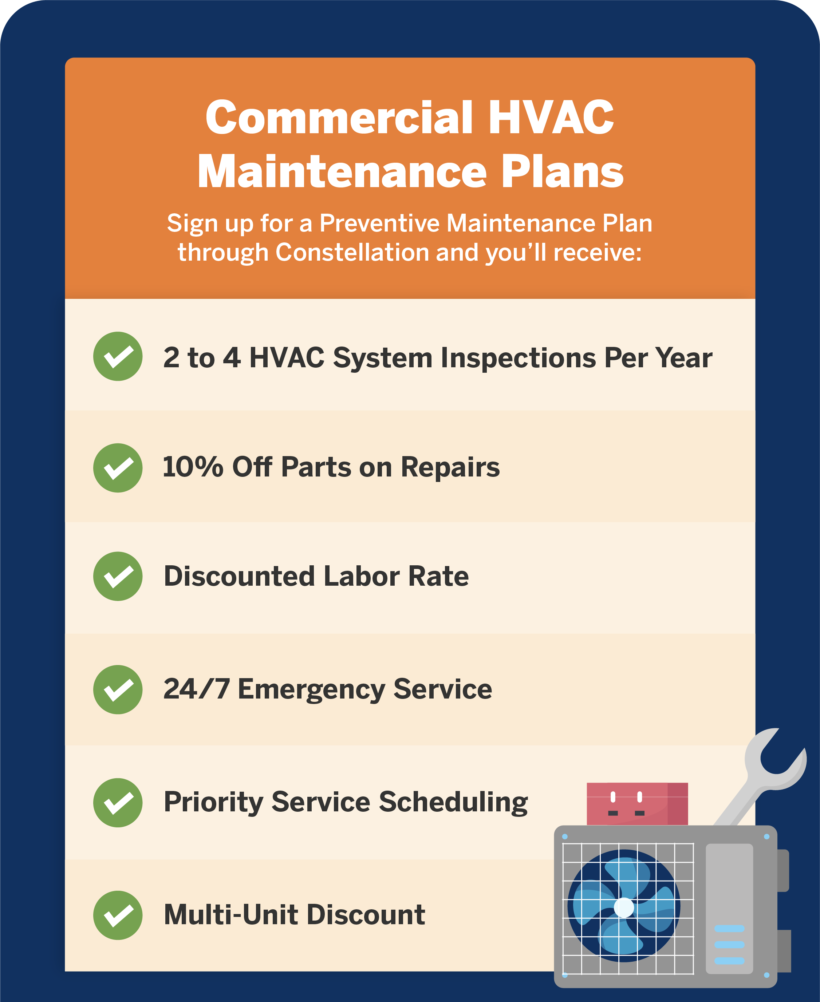
- Frequency of Visits: Ensure the agreement includes two dedicated visits per year (one for cooling, one for heating).
- Included Perks: Confirm whether members receive discounts on labor, replacement parts, or priority scheduling during peak seasonal surges.
- Transferability: Ask if your agreement can be transferred to a new homeowner if you sell your house, which adds tangible resale value to your property.
- Qualified Technicians: Ensure the service provider employs licensed, insured, and certified technicians who follow industry-standard maintenance protocols.
If you are looking to safeguard your heating and cooling equipment with reliable, year-round service, explore the tailored maintenance options available through Hydrostatic Plumbing & Air. Partnering with a dedicated local team guarantees your home stays comfortable regardless of outdoor temperatures.
Protect Your Home Comfort Year-Round
An HVAC maintenance plan is not just an added expense; it is a cost-effective strategy for protecting your home’s most vital mechanical system. By investing in proactive, biannual tune-ups, you lower your monthly utility costs, prevent sudden system failures, maintain healthy indoor air quality, and extend the life of your equipment.
Do not wait for your system to fail during extreme weather. Secure your home comfort today by enrolling in a preventative maintenance program designed to keep your heating and air conditioning running smoothly year after year.


